Other Useful Resources
Below are additional useful resources designed to build on your learning and application of DISC. These videos, activities, and articles will help you to dive deeper into the DISC Model and support you in building a strong foundational knowledge beyond your tailored training sessions.
Quick Navigation
What to Do With Your DISC Report
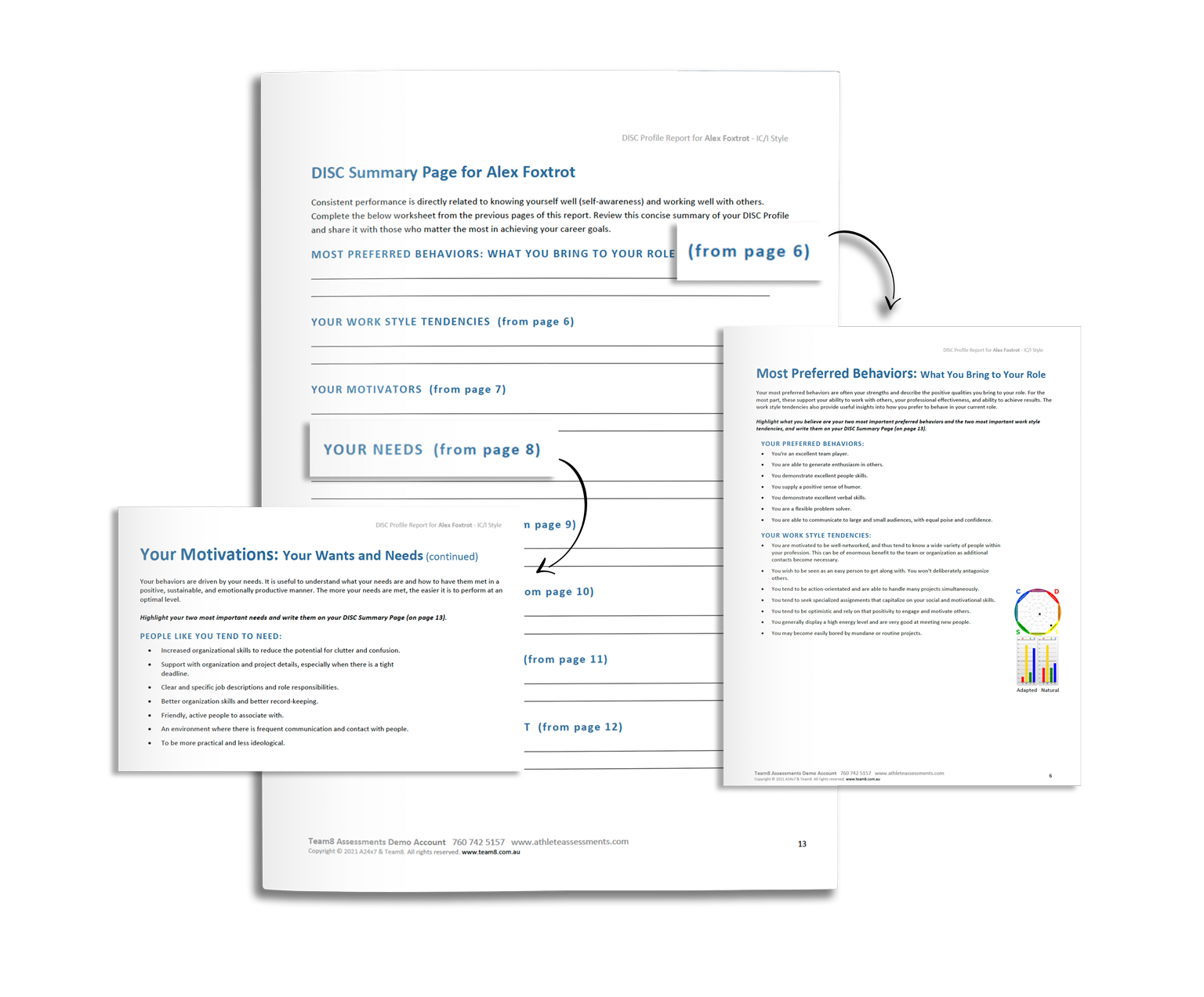
After completing your own DISC survey and receiving your individual DISC Report via email, we encourage you to print or save the report somewhere you can access at a later stage. We’ll be using your own DISC Report in the initial stages of your training to help you better understand DISC prior to using it with those you work with. As a first step, please complete the necessary task below to get the most value from reviewing your report. We also recommend that you encourage your clients to complete this step upon receiving their own report.
Consistent performance is directly related to knowing yourself well (self-awareness), leading, and working well with others. Here’s the first thing you can do to start to get the most value from your DISC Profile Report.
As you read over Part I of your report, fill in the Summary Page on page 13 with the key things you identify from each section.
Keep this summary somewhere you can easily access, so you can revisit your profile and share it with those who matter most in achieving your goals.
Foundations of DISC Profiling
These videos and activities will help you dive deeper into the other DISC styles and their similarities and differences ahead of commencing your first DISC Accreditation Consultation. Reviewing these materials will allow for your training consultations to be more tailored to your intended use and application of DISC.
Click through each tab below to learn more.
Diving Deeper into the DISC Model
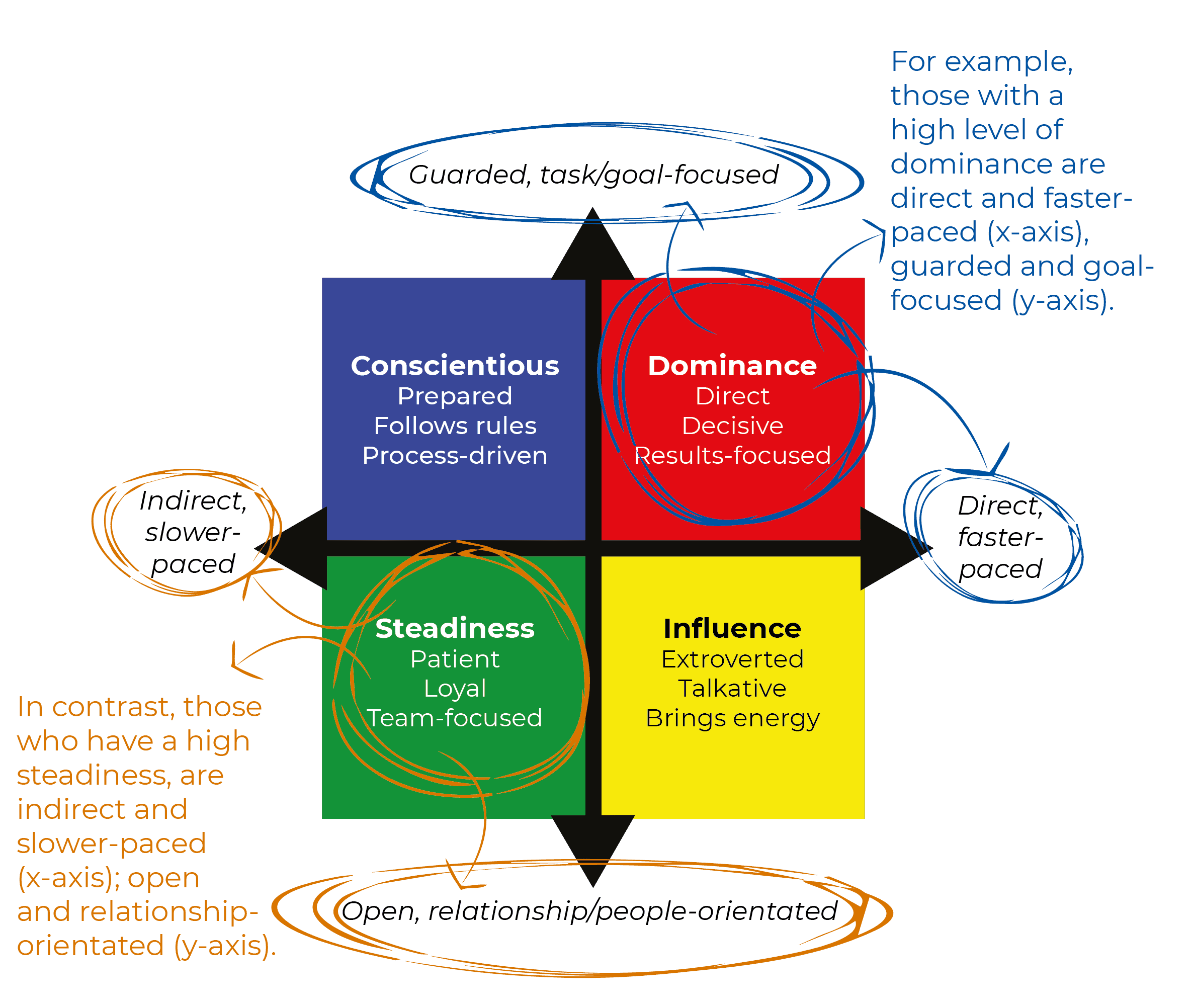
As you know from your training modules, DISC measures the degree of Dominance, Influence, Steadiness, and Conscientious behavior. Everyone has their unique level of each behavioral style in the context of their role. The four-quadrant model explains the behavior of people with high degrees of D, I, S, and C. We will also look at how these behaviors combine as we move along.
Quick Recap
Dominance or ‘D’ Style
Faster-paced and more direct behavior coupled with a goal orientation and guarded manner will indicate a likely dominance pr ‘D’ style.
Influence or ‘I’ Style
Faster-paced and more direct behavior coupled with a people orientation and open manner will indicate a likely Influence or ‘I’ style.
Steady or ‘S’ Style
Slower-paced and less direct behavior coupled with a people orientation and open manner will indicate a likely Steady or ‘S’ style.
Conscientious or ‘C’ Style
Slower-paced and less direct behavior coupled with a task orientation and guarded manner will indicate a likely
Pace and Directness
Here’s how to identify behaviors in others based on their pace and level of directness, using the X-Axis of the model.
Direct/Faster-Paced Behaviors
Frequently uses gestures and voice intonation to emphasize points, more likely to introduce self to others, frequent contributor in groups, less patient, expresses opinions readily, sustained eye contact.
Indirect/Slower-Paced Behaviors
Infrequent contributor in groups, reserves expression of opinions, more patient and cooperative, more likely to wait for others to introduce them, often makes qualified statements, infrequent use of gestures, little change in voice intonation.
Orientation and Openness
Look for these behaviors when working with others to determine their level of openness and focus.
Guarded/Task-Orientated Behaviors
Keeps feelings private, limited range of facial expressions, more formal and proper, avoids/minimizes physical contact, conversation stays on subject, speaks in specifics: cites facts and examples, goes with an agenda.
Open/People-Orientated Behaviors
Shows feelings and enthusiasm freely, more relaxed and warm, conversation includes digression, easy to get to know, initiates/accepts physical contact.
Statistical Validity and Reliability
As you will know, the validity and reliability of an assessment tool is critically important. The only real way to judge the true quality of an assessment, is if it has been independently analyzed by a reputable expert. Below is an interview with the Assessment Standards Institute (ASI) who re-analyzed the validity and reliability of Team8 People DISC Profiles, to ensure continued compliance with academic and industry standards. Access our validity report here.
Please note, this interview was recorded prior to Team8 People and Athlete Assessments merging in July 2026. The validity and reliablity of what was formerly known as Athlete Assessments DISC Profiles, still applies to the Team8 People suite of DISC Profiles.
DISC in Action
Learn more about the transformational role DISC can play in building relationships, communicating with others, and ultimately getting the best out of yourself and those you work with. This section includes case studies, examples, and interviews from others using DISC within their work.
Click through each tab below to learn more.
Communication Styles & DISC
Examine the DISC Profiles of various professionals in different industries and how this plays out within their individual roles. Learn more about how they make necessary adaptations to their behavior to get the best out of a situation or those they are working with.
Sport Psychologists and Performance Consultants of Different DISC Profiles
The below video contains a series of interviews with Sport Psychologists and Performance Consultants who have different DISC Profiles. Notice the different characteristics of their behavior as they unpack their individual profiles and how DISC applies to the work each of them do.
Leadership & Business Professionals
See different DISC Profiles from various professionals in the business and education industries and how this plays out within their individual roles. Learn more about how they make necessary adaptations to their behavior to get the best out of a situation or those they are working with.
Using DISC Working with Teams
The following video delves deeper into the experiences and approaches of how various Sport Psychologists and Performance Consultants engage and work with teams using DISC as a foundation to enhance relationships, drive performance, and improve self-awareness.
Team Development Using DISC
In the below video we sit down with Steven Ford, Director of Goodwork HR, and to talk about how he uses DISC to develop teams both internally, as well as externally, in the work they do.
Leadership Development Around the World
The below video contains a series of interviews with professionals and consultants from a range of industries who have different DISC Profiles. Notice the different characteristics of their behaviour as they unpack their individual profiles and how DISC applies to the work they each do.
Leadership and Action in DISC
The video below is an interview with Steve Sharp, Leadership and Culture Facilitator. Steve is an exceptional example of someone in a leadership position who is utilising DISC within his role.
Using DISC in Sales & Customer Facing Roles
Dive into our interview with Elissa Stephens, Learning & Capability Specialist at Carsales.
DISC Activities from Industry Professionals
This video includes more interviews with Sport Psychologists and Performance Consultants who share examples of DISC activities they have found useful when working with individuals and teams to understand the concepts of DISC and ultimately develop better self-awareness.
Using Observer Feedback
Complementing the use of each Team8 People’s DISC Profile, the Observer Feedback capability provides your clients with the perfect opportunity to celebrate what they are doing well, whilst evaluating potential blindspots, and recognizing key opportunities for further improvement. By understanding how to utilize this optional and included capability, you will expand on your foundational knowledge of DISC to develop a greater understanding of the key areas that will help those you work with excel in their chosen endeavor, and those that provide an opportunity for further growth.
No matter what stage of their career or education your clients are at, the ability to effectively receive and implement feedback is a crucial skill in aiding personal and professional development.
Observer Feedback in Practice
Before you use the Observer Feedback capability with your clients, watch the below videos on how other professionals and various sport professionals utilize this capability in their work with others. This will help you understand how this process can be implemented within various contexts to give the best opportunity for personal development.
Click any point to expand. Each section contains a different video.
The Observer Feedback Process in Practice
The Observer Feedback Process with Coaches
In the following interview, Dr. William Temple elaborates on the various ways the Athletics Department at the University of the Cumberlands use DISC and Observer Feedback to aid in the development of their sport coaches at the university.
Undertaking the Observer Feedback Process
Now that you have some foundational knowledge on how the Observer Feedback capability can be utilized, let’s go through the process of completing it. In this video, Liz covers the key steps for completing Observer Feedback, including how to invite Observers, track feedback, and download results.
Download the instructions and email templates below. This will walk you through how to invite your chosen Observers to complete the Observer Feedback process.
Your Observer Feedback Checklist
Click any point to expand.
1. Choose Quality Observers
1. Choose quality Observers
The people you invite to give you feedback should be well informed about the environment you’re working or studying in.
2. Ensure to Include Multiple Observers
Follow instructions provided as to the number of Observers to include.
3. Use the Email Template Provided to Invite Your Observers
Download the email template document above which has all the key Observer Feedback information you need. Be sure to tailor the template to the nature of the person you are inviting.
4. Track Your Observers' Responses
4. Track your Observers' responses
You can do this through your Team8 People user account. Make sure to politely follow up with your Observers if they are yet to complete their feedback. You may need to do this a few times!
5. Download Your Results
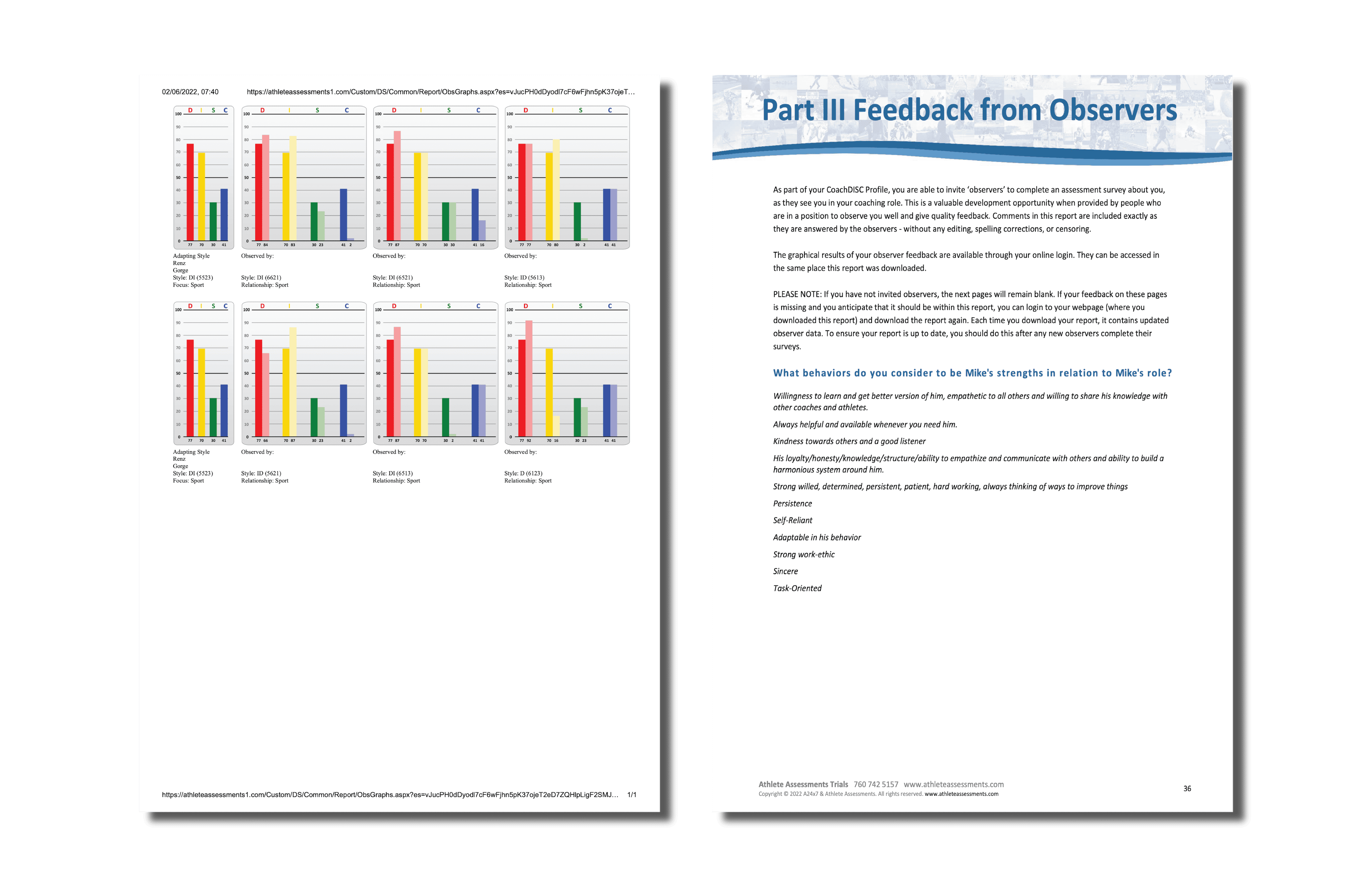
Follow the instruction guide to redownload your DISC Profile Report which will now include the Observer Comments on pages 36-38. You also need to download the Observer Graphs.
Reviewing Observer Feedback Results
In this video, Liz goes through some key tips to keep in mind when reviewing Observer Feedback with your clients, as well as some simple exercises to break down individual feedback and draw out common themes for implementation. We also go through setting up an Action Plan to help put your client’s feedback into practice.
Download the worksheet below to help set up your client’s Observer Feedback Action Plan.
Before you finalize your Client's Action Plan
Make sure you’ve completed the following exercises mentioned in the video.
Then, with the second pen color, highlight those that surpised you.
More Interesting Resources
Select the tab most relevant to your interest.
Sport Related Resources
Click any point to expand.
Articles
Podcasts
The Power of Self Awareness
Bo Hanson on Keep the Line Moving with Chris Gargano
Dr. Liz Masen on The Power of DISC Profiling
Dr. Liz Masen on The Coaches Corner with Riki Tahere
Bo Hanson on Improving Team Communication
Bo Hanson on No Show Dogs: Powered by ReliaQuest
Webinars
Choosing Captains and Leadership Development within your Team
If you waiver on how to select your team captains or leadership group, or are looking for more effective ways to develop leadership within your team, or these topics fascinate you, then this webinar with Bo Hanson is for you!
Sport Psychology
'Masterclass'
This insightful webinar featured three Certified Mental Performance Consultants (CMPC) as special guest panelists, who were generous enough to share their diverse experiences and expertise in the field of Sport Pscyhology.
Lead from Within
How to get your athletes to lead from within.
This webinar is all about the ‘how-to’ for building athlete leadership in any program. Hear from people who have truly engaged their athletes to lead from within, and gain exclusive insights into championship winning strategies.
Interested in Mentoring?
Discover leading examples of what effective mentoring looks like within a variety of contexts.
Watch an exceptional panel of experts share leading examples of what effective mentoring looks like in a variety of contexts, and success factors at program and individual levels.
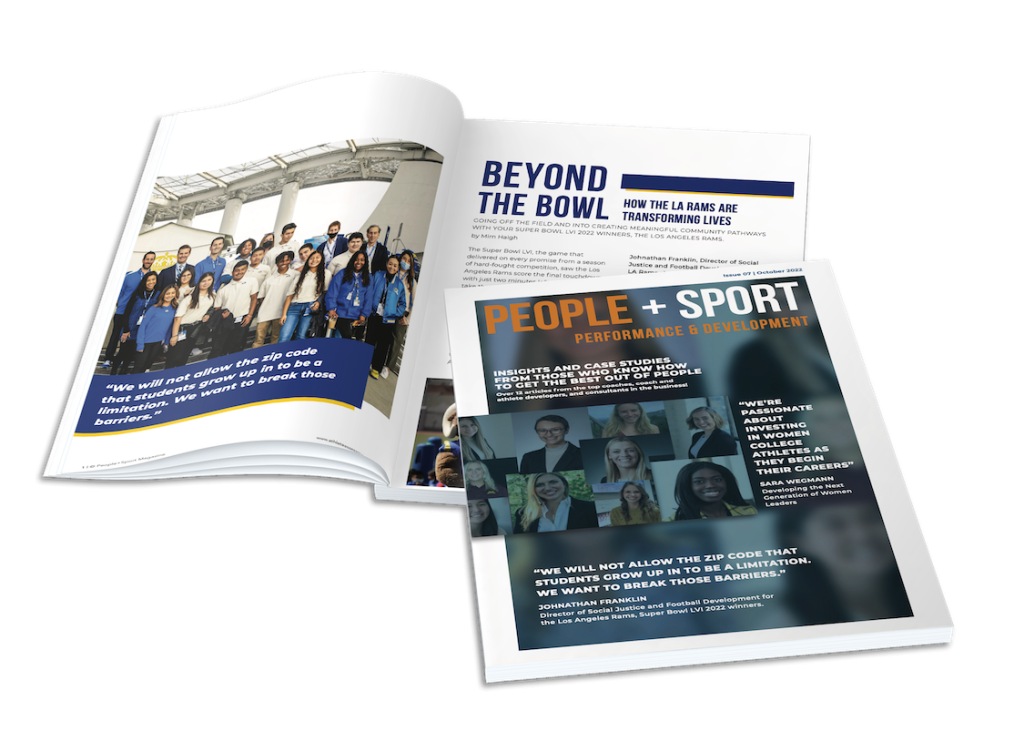
Magazines
Interviews
Full Guest Interviews
Enjoyed listening to the insights shared by various sport professionals? Watch the full interviews with each person below.
Amy Wooten
Former Assistant Director of
Student-Athlete Development
University of Washington
Becky Ahlgren Bedics
Vice President of Mental Health
& Performance
Women's Tennis Association
Samantha Gilmore
Former Mental Performance Coordinator
New York Mets Minor League Baseball
Business Related Resources
Click any point to expand.
Articles
Read more about DISC in Practice
Access a curated library of relevant articles and case studies to gain further insight into the approaches, practices, and experiences of various industry professionals.
Podcasts
Dr. Liz Masen on The Power of DISC Profiling
Dr. Liz Masen on The Coaches Corner with Riki Tahere
Webinars
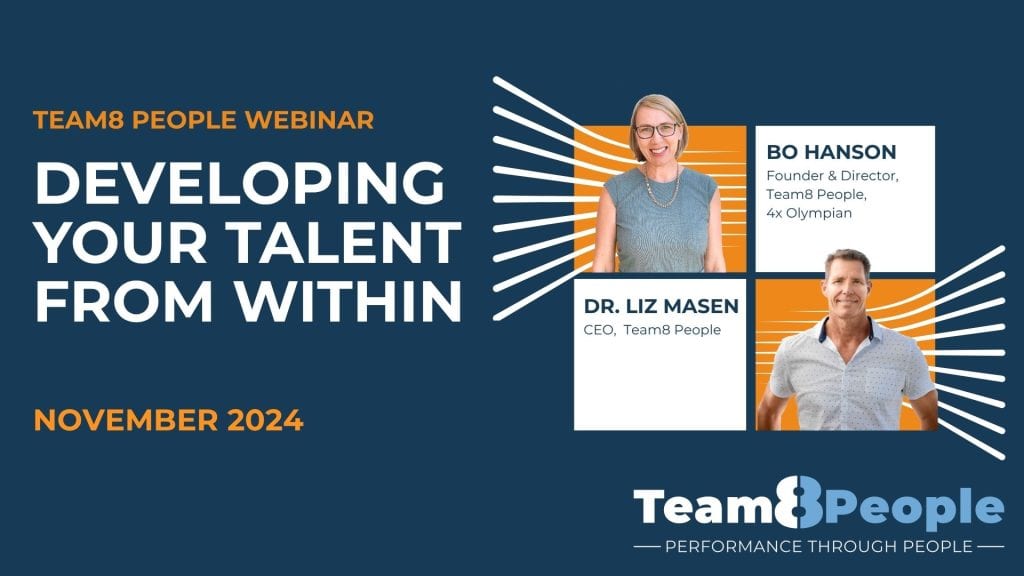
Developing Your Talent from Within
This webinar focused on the power of internal talent development, featuring practical examples drawn from our diverse client base, showcasing successful initiatives that have enhanced team dynamics, leadership development, and individual performance.
Learning Platform Link Hub
This page houses all the links to the different learning dashboards available on Team8 People’s Learning Platform for our different client programs. You are welcome to use these resources to support your own work with clients, but please do not share them publicly.